My Shop

Home / Services / RORO Shipping

International Roll-on Roll-off (RORO) Car Shipping — Fast, Reliable Services Worldwide

RORO (Roll-on/Roll-off) shipping is a method where vehicles are driven directly onto a purpose-built car-carrying vessel, secured in the hold, and driven off at the destination port. It is the most cost-effective international vehicle shipping method for standard roadworthy cars, SUVs, vans, and light trucks. RORO services operate on fixed scheduled routes to major ports across the USA, Australia, the Middle East, Africa, and Europe. Electric vehicles cannot travel via RORO and must use container shipping instead.

What Is RORO Shipping?

RORO stands for Roll-on/Roll-off. It is an ocean freight method where wheeled vehicles are driven directly onto a specialist vessel at the departure port, secured on board for the voyage, and driven off again at the destination port. There are no cranes, no crates, and no containers involved — the vehicle moves on its own wheels from port ramp to ship deck.

RORO vessels are purpose-built multi-deck ships designed specifically to carry cars, vans, SUVs, trucks, buses, and other wheeled cargo. The largest vessels in operation today carry thousands of vehicles simultaneously, running on fixed international routes with scheduled weekly or monthly departure dates. For any standard roadworthy vehicle, RORO is the most practical and economical method of international car shipping available.

How Does the RORO Shipping Process Work?

Understanding the step-by-step process helps you prepare your vehicle correctly and avoid delays at the departure port.

Step 1 — Vehicle Collection or Drop-Off
Your vehicle is either collected from your address via a professional transporter or delivered directly to the nominated departure port terminal.

Step 2 — Pre-Shipment Inspection
At the port terminal, a condition report is completed, fuel levels are checked and reduced to approximately one quarter tank, and the vehicle is handed to the terminal handling team.

Step 3 — Vessel Loading
Trained port staff drive your vehicle aboard the RORO vessel and secure it on deck. Vessels depart on confirmed scheduled sailing dates.

Step 4 — Sea Transit
Your vehicle travels secured on board the vessel for the full duration of the voyage. Transit times vary by destination — see the table below.

Step 5 — Arrival and Customs Clearance
On arrival at the destination port, your vehicle is discharged and made available for customs clearance and collection. Destination requirements vary by country.

RORO vs Container Shipping — Which Is Right for Your Vehicle?

The choice between RORO and container comes down to your vehicle type, condition, and budget. Neither method is universally better — the right one depends on your specific situation.

Factor

RORO

Container

Cost

Lower — most cost-effective option

Higher — shared or dedicated container costs more

Vehicle condition

Must be roadworthy and running

Non-runners accepted

Electric vehicles

Not accepted

Required method for all EVs

Classic / high-value cars

Exposed to sea air and elements

Fully enclosed and protected

Personal belongings

Not permitted inside vehicle

Can include personal effects (varies by route)

Destination availability

Served by most major global ports

Available where container services operate

RORO is the right choice when your vehicle is in full running condition, you are shipping a standard car, SUV, van, or light truck, and cost efficiency is a priority.

Container shipping becomes the better choice when your vehicle is a classic car, high-value, non-runner, or electric vehicle — or when you need to include personal effects alongside the vehicle.

What Are the Rules Before Shipping by RORO?
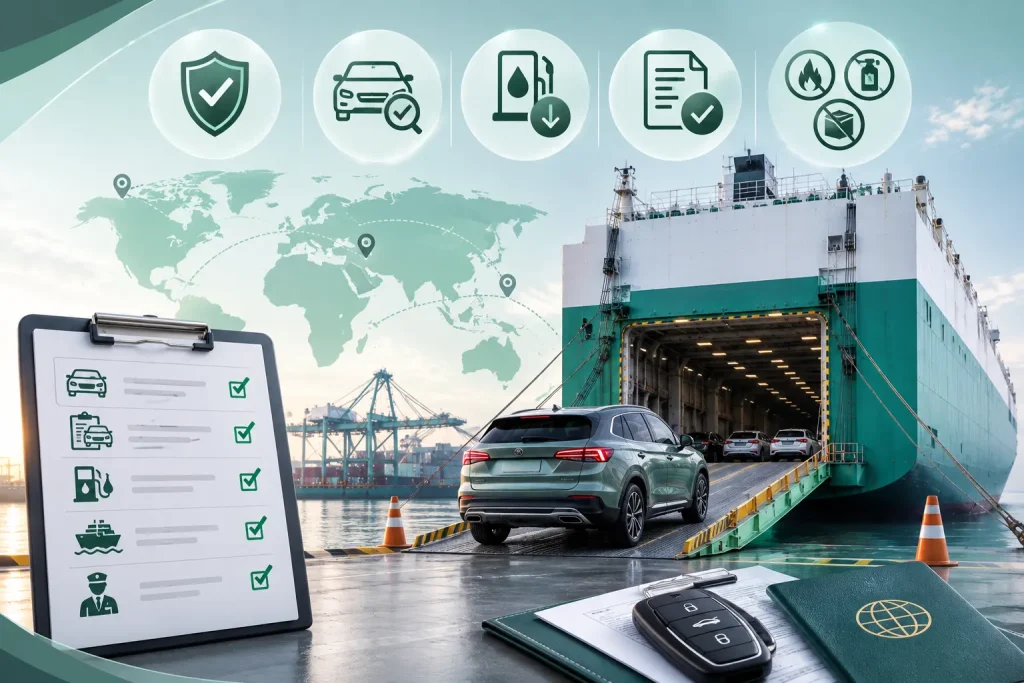
What Are the Rules Before Shipping by RORO

Every RORO shipment has standard requirements that apply across all routes and all shipping lines. Non-compliance at the port causes delays and additional costs.

  • Vehicle must be in running condition — RORO requires the vehicle to be driven on and off the vessel under its own power
  • Fuel level must be reduced to approximately one quarter of a tank or less before port check-in
  • No personal belongings inside the vehicle — this is a universal shipping line rule on all RORO services globally
  • Electric vehicles are not permitted on RORO vessels due to battery fire-safety regulations — EVs must ship by container
  • Hybrid vehicles are accepted on most RORO routes — confirm on a destination-by-destination basis before booking
  • Export documentation must be complete and in order before the vessel departs — your shipping agent manages this as standard
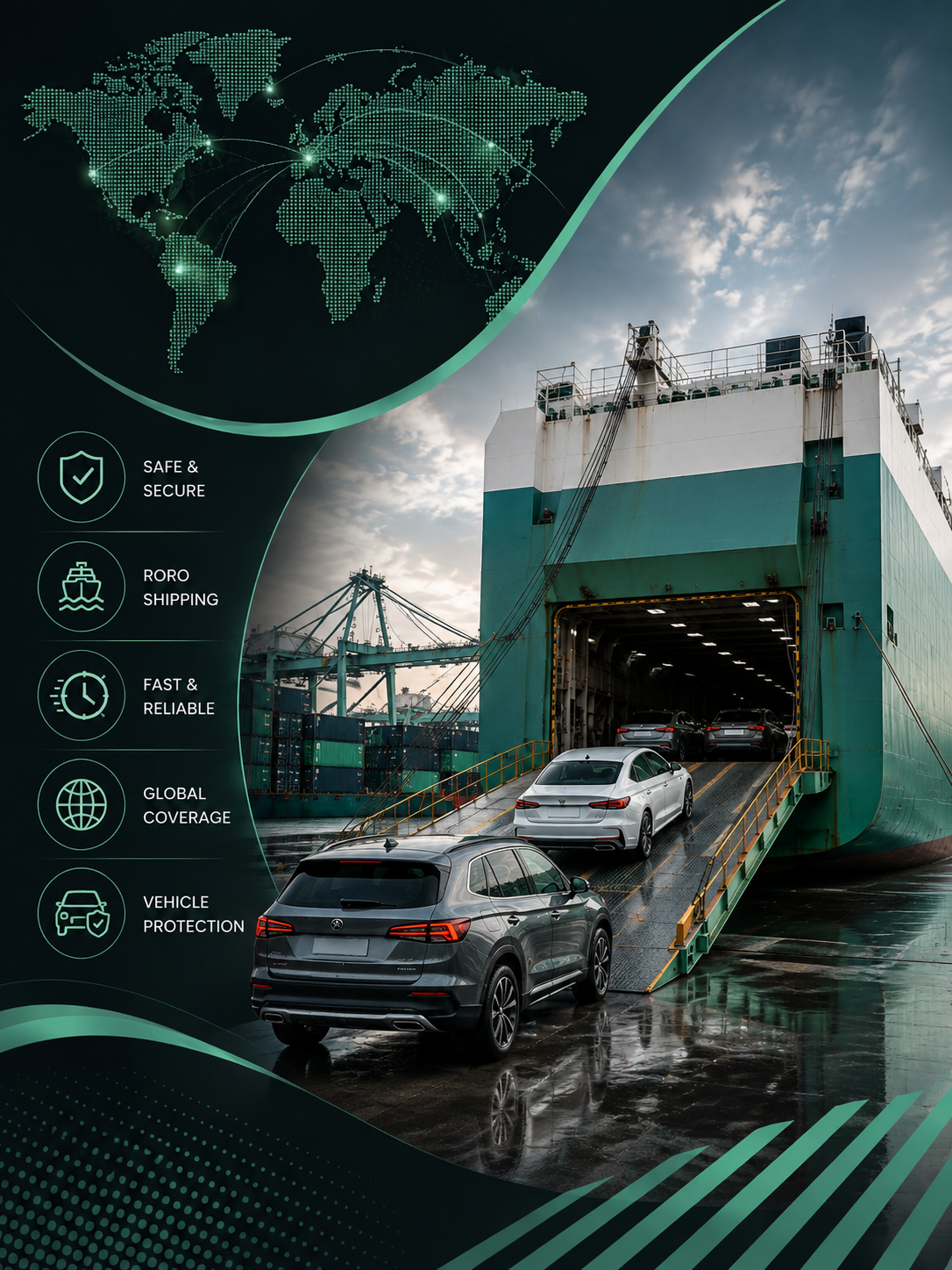
RORO Car Shipping Services — International Roll-on Roll-off Vehicle Transport

Where Can You Ship a Vehicle Via RORO?

RORO services operate on a genuinely global scale. Major international destinations served by regular RORO routes include:

Destination

Key Ports

Typical Transit Time

USA

Baltimore, Brunswick, New York, Tacoma

14–21 days

Australia

Fremantle, Melbourne, Sydney, Brisbane

25–35 days

UAE / Middle East

Jebel Ali, Dammam, Jeddah, Kuwait

18–25 days

Turkey

Gemlik, Derince, Izmir, Mersin

10–14 days

West Africa

Tema, Lagos, Abidjan, Dakar

14–28 days

East & Southern Africa

Mombasa, Dar es Salaam, Durban

21–35 days

Europe

Huelva, Cadiz and various road-RORO connections

3–7 days

Transit times are port-to-port estimates. Allow additional time for pre-shipment processing, destination customs clearance, and local delivery.

How Car Shipping Worldwide Manages Your RORO Shipment

RORO shipping involves more moving parts than it appears — departure port selection, sailing schedule coordination, export documentation, destination customs requirements, and compliance rules all need to be handled correctly before a single vehicle boards a vessel.

Car Shipping Worldwide manages the entire process on your behalf. We match your vehicle to the correct RORO service based on your destination, arrange collection from your address or coordinate port drop-off, handle all export documentation and pre-shipment compliance checks, and keep you informed at every stage of the voyage.

At the destination end, we work with appointed port agents and customs brokers across all major RORO receiving ports worldwide — ensuring your vehicle clears customs efficiently and is released without unnecessary delays or storage charges accruing at the port.

Whether you are shipping a single private car or a multi-vehicle consignment, our team has the route knowledge and operational experience to manage it cleanly from origin to destination.

Get a Free RORO Shipping Quote →

Frequently Asked Questions: RORO Car Shipping

FCL (Full Container Load) gives you exclusive use of a 20ft, 40ft, or 40ft High Cube container — maximum security with the ability to include personal effects alongside your vehicle. LCL (Less than Container Load) consolidates your cargo with other shipments in a shared container, reducing cost for smaller consignments. Most vehicle shipments use FCL for security and flexibility.

Yes — and container is the only compliant method for shipping EVs by sea. Electric vehicles are classified as dangerous goods under UN 3171 (IMDG Code) due to their lithium batteries. A hazard surcharge of £295 applies. Ship Cars handles all IMDG compliance documentation and provides battery preparation guidance per Amendment 42-24 requirements.

Yes. Non-running vehicles can be loaded into a container using a forklift or winch — the vehicle does not need to be driveable. Non-runners cannot travel via RoRo, which requires vehicles to drive on and off the vessel under their own power.

Yes — in an FCL (dedicated) container. Personal effects, spare parts, and household goods can travel alongside your vehicle provided they are securely packed, properly braced, and fully declared on the customs documentation. Hazardous and prohibited items are not permitted. Destination customs rules on personal effects vary by country — Ship Cars advises on route-specific restrictions at time of booking.

Approximate transit times from London Gateway: Jeddah 16 days, Jebel Ali (Dubai) 28 days, Hong Kong 40 days, Australia 47–66 days, New Zealand 65 days. Allow additional time for port handling and customs clearance at the destination port after vessel arrival.

You will need the V5C registration certificate (or V5C/2 for permanent export notification to DVLA), a commercial invoice, and any destination-specific import permits. Ship Cars manages the UK export customs declaration via HMRC’s Customs Declaration Service (CDS) and arranges the Bill of Lading for every container shipment.

Other services

Container Shipping

Sole-use enclosed containers

Shared Container Shipping

LCL consolidations, up to 30% cheaper

Classic Car Shipping

Enclosed transport for collectors

Commercial Vehicle Shipping

Vans, buses and heavy plant

Car Shipping

Any make or model, worldwide

Motorcycle Shipping

Custom crating and secure loading

Ready to ship your vehicle?

Request a quotation and our team will advise on the most suitable shipping option for your vehicle.